

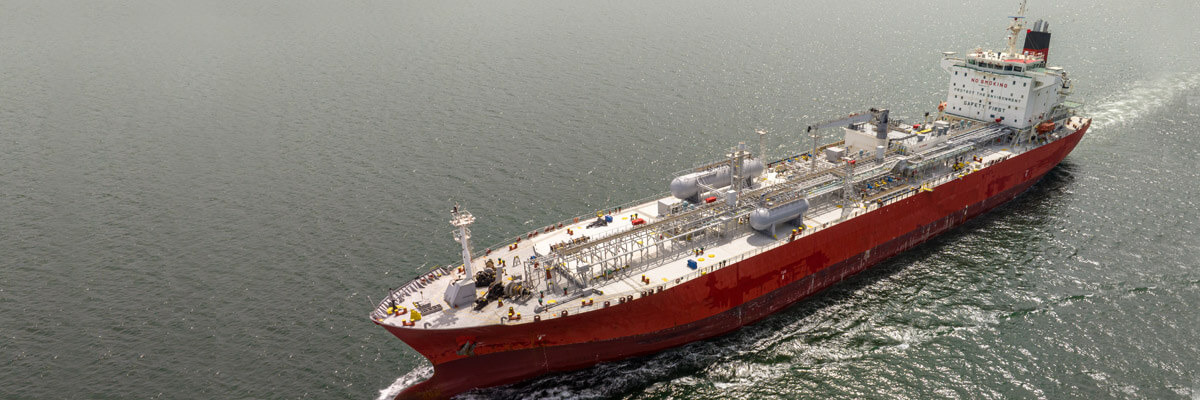
Crude earnings climb 16% week-on-week, reinforcing broad strength across tanker markets
Tanker: Geopolitical risk and weather disruption drive strongest earnings in years
The tanker market strengthened sharply this week, led by VLCC and Aframax segments, as heightened geopolitical risk in the Middle East and persistent weather disruption tightened prompt tonnage availability. Charterer activity accelerated toward the end of the week, lifting VLCC spot earnings above USD 130,000 per day and pushing average tanker earnings to their highest level in nearly three years. Aframax markets also remained firm across the Atlantic, supported by weather-related itinerary delays and limited supply, while Suezmax earnings held steady at elevated levels amid mixed regional dynamics.
LPG/VLGC: Earnings spike as Atlantic delays tighten market
VLGC markets delivered a very strong week, driven by a surge in Atlantic fixing activity and tighter-than-expected vessel availability caused by congestion and operational delays. Spot earnings on the Houston-Chiba route increased by around 30 percent week-on-week to above USD 80,000 per day, marking the highest level since early 2024, while modern VLGC time charter equivalents continued to trend higher. Period rates firmed modestly, supported by improving sentiment and expectations that longer routing patterns and structural LPG export growth will continue to underpin tonne-mile demand, even as LNG spot markets softened further on a lengthening tonnage list. As winter is usually a strong period for LPG trade, we can expect some normalization in rates heading into Q2.
PCTC: Manufacturing shifts support structurally resilient demand
PCTC demand is increasingly being reshaped by Chinese OEMs relocating production closer to end markets rather than expanding long-haul exports from China. Planned manufacturing in Mexico, Canada and potentially the UK reflects a strategic shift to bypass tariffs and reduce logistics costs, which would materially reduce long-haul vehicle shipments from China to Europe and North America. As production moves onshore or near-shore, PCTC utilisation is likely to tilt toward shorter-haul regional trades rather than intercontinental routes, lowering tonne-mile demand even if vehicle volumes remain stable. While new regional redistribution flows may emerge, the structural shift toward local production suggests a more muted long-term outlook for PCTC tonne-mile growth compared with the China-led export cycle of recent years.
Geopolitics: Energy security concerns reshape trade flows
Geopolitical developments remained a key driver for shipping markets last week, with rising tensions in the Middle East and supply disruption in Kazakhstan pushing oil prices to six-month highs. Brent crude moved above USD 70 per barrel, a 16% increase since the start of January, adding urgency to chartering decisions and reinforcing support for tanker utilisation through re-routing and substitution effects. Following the EU ban on Russian-derived products, Indian refiners have decreased their imports of Russian barrels, which has caused Russian crude to build up at sea. Additionally, Venezuela approved oil reforms allowing private producers to market crude, prompting the US to ease energy sanctions.
Sources: Clarksons & MB Shipbrokers