

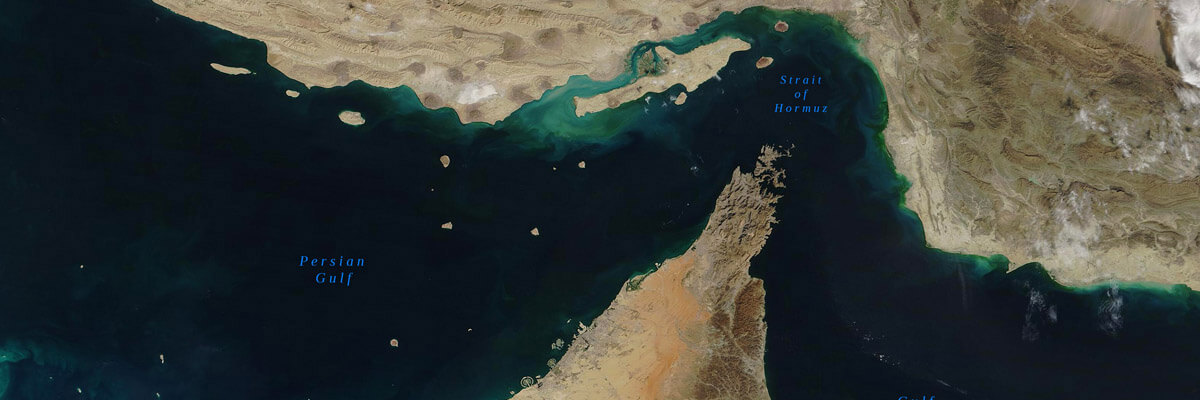
Conflict in the Gulf threatens one of the world’s most critical energy chokepoints, increasing volatility across oil and shipping markets
Hormuz disruption raises shipping risk
Conflict escalated in the Middle East in late February following coordinated strikes by the United States and Israel on Iranian targets, triggering retaliatory attacks on commercial vessels and maritime infrastructure in the Persian Gulf. The US-led naval coalition protecting shipping has since raised the regional threat level to critical, with multiple tankers reportedly targeted in recent days, according to TradeWinds. As security risks increased and insurers reassessed war risk coverage, shipowners and charterers began pausing transits through the Strait of Hormuz, sharply reducing vessel traffic through one of the world’s most important energy corridors.
Shipping market context: Disruption to a key maritime chokepoint tightens vessel availability
The Strait of Hormuz remains one of the most critical chokepoints in global trade. According to Clarksons, the corridor is responsible for roughly 38% of global seaborne crude oil trade, alongside approximately 29% of LPG trade, 19% of oil products and 19% of LNG shipments. Disruption to transit has effectively trapped thousands of vessels inside the Persian Gulf. Clarksons estimates that roughly 7% of the global crude tanker fleet capacity and 5% of LPG fleet capacity are currently located within the region, increasing operational uncertainty as vessels delay voyages, reroute or await clarity on security conditions and insurance coverage.
Policy response: US proposes tanker escorts and insurance support, though execution remains uncertain
Amid rising concerns over global energy supply disruption, US President Donald Trump stated that the United States would ensure the continued flow of energy shipments from the Middle East. The administration indicated that the US International Development Finance Corporation could provide insurance support for vessels transiting the Gulf, while the US Navy may escort tankers through the Strait of Hormuz if necessary. However, several aspects of the proposal remain unclear, including the cost of insurance coverage, which vessels would qualify, and how quickly the program could be implemented. Analysts at RBC Capital Markets noted that while the announcement helped ease oil prices temporarily, establishing a large-scale insurance backstop for commercial shipping could face significant practical challenges.
Oil market context: Limited alternatives to Hormuz increase risk to global energy flows
The disruption comes at a time of elevated oil export activity from the Middle East. According to Clarksons, Iran produced roughly 4.6 million barrels per day of oil in 2025, representing about 5% of global output, and exported approximately 1.6 million barrels per day of crude, with China accounting for a significant share of imports. Although some pipeline infrastructure exists to bypass the Strait of Hormuz, alternative export capacity remains limited. Clarksons estimates that while roughly 5 million barrels per day of crude could potentially be exported via pipelines outside the strait, as much as 10 million barrels per day of regional exports may still depend on Hormuz transit. Prolonged disruption could therefore constrain global oil flows and increase volatility in energy markets.
LPG market context: Gulf disruption could tighten supply for Asian importers
The Persian Gulf is also a major hub for LPG exports. Clarksons estimates that Iran alone exported approximately 10 million tonnes of LPG in 2025, representing roughly 7% of global LPG trade, with the majority of volumes shipped to Asian markets including China and the Indian Subcontinent. Any disruption to shipping through the Strait of Hormuz therefore has direct implications for LPG logistics and regional supply balances. In the near term, delays, rerouting and operational disruption could tighten vessel availability and increase freight volatility across the VLGC market.
Developments in the Strait of Hormuz will therefore remain a key driver of volatility across global energy and shipping markets in the weeks ahead.