

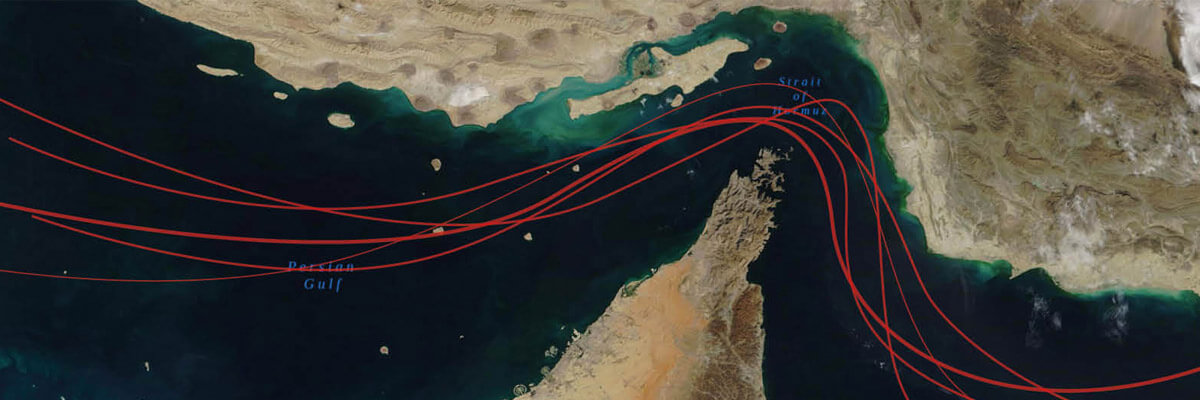
Iran agrees to pause its blockade of oil and gas supplies through the Strait of Hormuz
A last-minute deal stabilizes the immediate outlook, but the Strait reopens into a highly imbalanced market
Following the ceasefire announcement, oil prices reacted sharply, plummeting albeit remaining higher than pre-war levels. According to ship tracker Kpler, there were 187 laden tankers carrying 172 million barrels of crude oil and refined products stranded inside the Strait prior to the announcement on 7 April. Approximately 90 VLCCs, around 13% of the active mainstream fleet, had been ballasting westward ahead of the deal, with the Atlantic VLCC count rising to a record 65 units. Owners had been repositioning in anticipation of a prolonged closure, not a reopening. In an early sign that the ceasefire is beginning to take effect, Reuters reported on 8 April that the first ship had passed through the Strait since the ceasefire, with Iran’s state media confirming the transit had taken place with Iran’s permission.
The ceasefire resets near-term expectations, but the rate impact will vary sharply by segment
- VLCCs will feel it most acutely. The wave of westward ballasters now faces a congested Atlantic market as Middle East liftings resume, with earnings in the US Gulf, Latin America, and West Africa likely to come under some downward pressure, if the strait remains fully open.
- Suezmaxes and Aframaxes are more diversified by trade route and will feel some pressure as tonnage supply loosens, but the correction is likely to be less severe and slower to materialise than for VLCCs.
- Clean product tankers (LR2, LR1, MR) could face a double squeeze. The Hormuz closure created an unusual west-to-east arbitrage, with MRs carrying US Gulf and European diesel toward Asia via the Cape. As Gulf product exports resume, that long-haul trade will likely diminish, removing a key tonne-mile driver at the same time as more vessels return to normal trade lanes.
- LPG/VLGCs and PCTCs both benefited from longer diversion routes during the closure. As Middle East volumes recover, the tonne-mile boost recedes, though underlying demand fundamentals for both segments remain intact.
Iran has stipulated that Hormuz passage be coordinated through its armed forces, and the two-week window is a negotiating pause, not a resolution. Investors should treat this as the beginning of a gradual, uneven normalisation rather than a clean market reset.
Sources: Al Jazeera, Axios, BRS Shipbrokers, CBS News, CNN, Euronews, Kpler, NBC News, Reuters & Time