

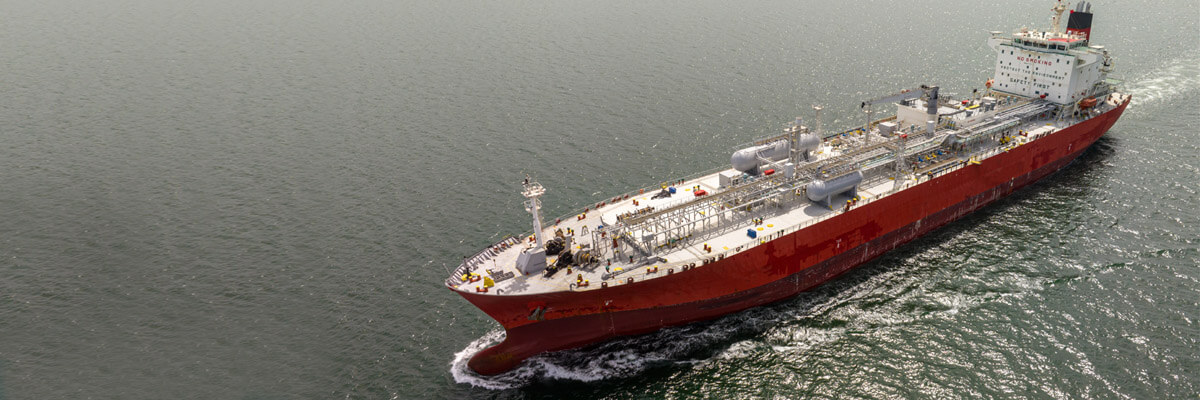
LPG leads gains as disrupted flows and longer voyages tighten vessel supply
Tankers: VLCC earnings rise to $225,000/day as Hormuz blockade keeps East-West rates sharply split
VLCC earnings rose 12% this week to around $225,000/day, but the number tells only part of the story. Ships loading in the Atlantic are earning closer to $130,000/day, while vessels trading through the Red Sea and Oman are earning far more, because the Persian Gulf has essentially stopped functioning as an oil export region. The Strait of Hormuz remains closed for practical purposes, with Iran allowing only around 12 ships through per day and very few commercial vessels actually making the crossing. According to MB Shipbrokers, around 9.1 million barrels per day of Persian Gulf oil production is currently offline, and the volume of oil being imported from the region has dropped to below 2 million barrels per day. Rates for Suezmax and Aframax vessels eased in the Atlantic this week, as some charterers chose to wait, hoping for lower rates if diplomatic progress continues. Meanwhile, owners willing to commit vessels on one-year contracts are securing $128,500/day for scrubber-fitted VLCCs, a sign that charterers are preparing for disruption to last. If Hormuz reopens, rates would fall sharply and quickly.
LPG/VLGC: USG market runs red-hot as Panama Canal bottleneck extends voyage times further
VLGC earnings on the Houston-Chiba route jumped 29% this week to $93,855/day, the highest level since early 2024, and there are no ships available to load from the US Gulf until the end of May. The reason is straightforward: Persian Gulf LPG exports have effectively stopped, so Asian buyers are buying everything they can from the United States instead, meaning ships are travelling much longer distances than usual. The Panama Canal is making things worse. A single guaranteed transit slot sold for $4 million this week, leading many owners to reroute their ships around the Cape of Good Hope, adding 10 to 15 days to each voyage. In Asia, the ceasefire prompted some interest from buyers hoping to resume Gulf loadings, but no deals were done as ship owners remain unwilling to risk transiting Hormuz. Few new ships are due to be delivered before 2027, so the market is unlikely to loosen much in the near term unless Hormuz reopens.
PCTC: Rates recover to $50,000/day as rising fuel costs drive EV demand alongside tight fleet availability
Car carrier charter rates recovered to $50,000/day this week, helped by a shortage of available ships and steady demand for vehicle exports, especially from China. The car carrier sector is less affected by the Hormuz closure than other shipping segments, since the Middle East mainly receives vehicles rather than exports them. However, higher fuel prices caused by the conflict have had an interesting side effect: consumers in key markets are increasingly turning to electric vehicles, which is adding new demand for car carrier capacity on routes from Asia to Europe and North America. The order book of around 134 newbuildings represents roughly 18% of the current fleet, with deliveries spread across the next few years.
Geopolitics: Trump says war is “close to over” but Hormuz remains physically shut
There were signs of diplomatic progress this week. The US and Iran are reported to have agreed in principle to extend the ceasefire and continue negotiations, with mediators working to find common ground on Hormuz and Iran’s nuclear programme before the current truce expires next week. President Trump said the conflict is “close to over.” However, the situation on the water has not improved: only around 1.5 million barrels per day are flowing through Hormuz, compared to roughly 20 million barrels per day before the conflict, as a US naval blockade continues to restrict Iranian oil flows while Tehran keeps the strait closed to commercial shipping. Attacks on Saudi Arabia’s East-West pipeline have also reduced the kingdom’s ability to export via its Yanbu terminal, which had been acting as the main alternative route. Next week’s ceasefire deadline is the single most important near-term event for shipping markets: a deal that reopens Hormuz would push tanker and VLGC rates down quickly, while a breakdown in talks would keep conditions tight well into summer.
Sources: Associated Press, Bloomberg, Clarksons Research, MB Shipbrokers & Reuters