

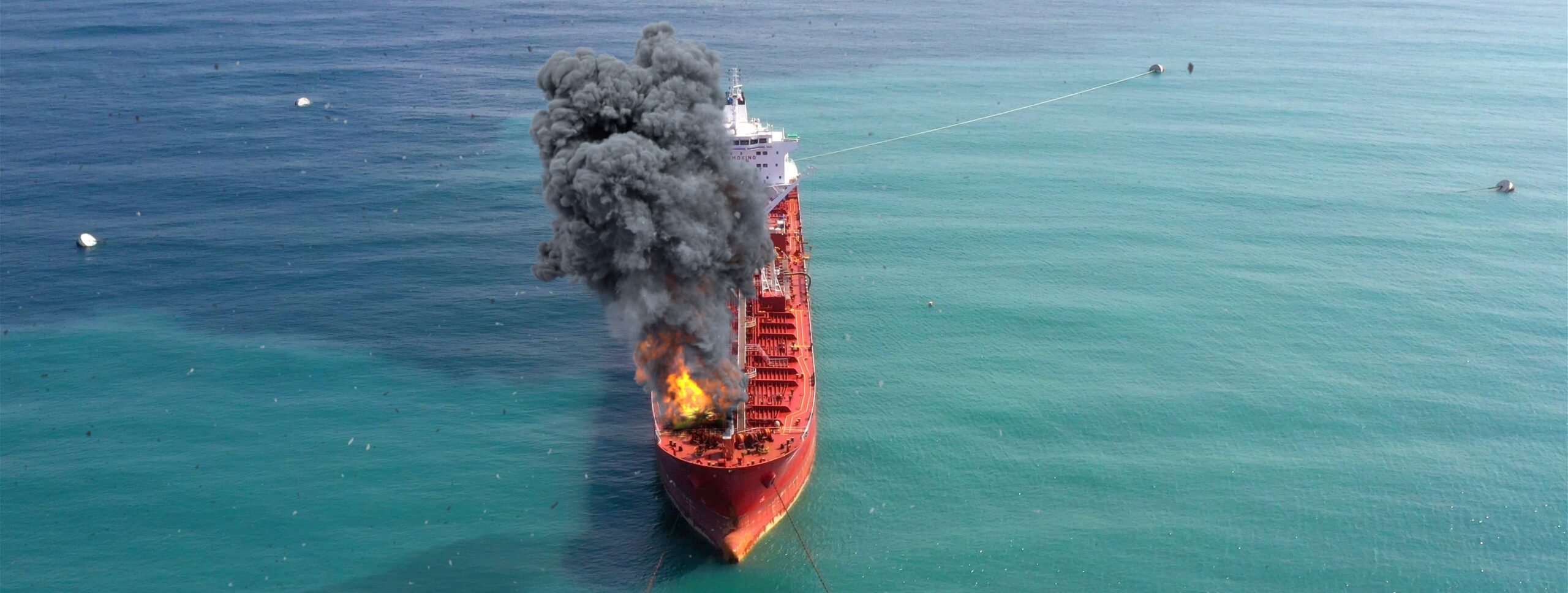
Attacks on shipping intensified during October, while diplomacy between Washington and Tehran remained deadlocked. Crude exports continued despite the disruption, leaving security and operating costs central to the shipping outlook.
Attacks reach transfer anchorages and Saudi export infrastructure
According to Clarksons, more than 30 vessels were attacked and damaged in the Middle East between 1 and 23 October, already more than in any full month since the conflict began. On 11 October, Iran warned that ships involved in shuttle operations could be targeted in any location, and on the same day a drone struck a tanker at Oman’s Sohar anchorage, which is used for ship-to-ship transfers. Later in the month, Iran targeted tankers on its blacklist that were not transiting the strait. Yemen’s Houthis, who are aligned with Iran, attacked Saudi export infrastructure, including the Red Sea port of Yanbu, and Saudi Aramco evacuated its headquarters in Dhahran. Middle Eastern crude exports remained close to pre-war levels, but insurance and security costs rose, and fewer owners were willing to send their ships through the Strait of Hormuz and into the Gulf.
Diplomacy after the US midterm elections is the key variable
Diplomacy did not produce a breakthrough. Iran offered to reopen the strait if the US lifted its naval blockade of Iranian ports, while Washington continued to give priority to Iran’s nuclear programme, with Pakistan, Qatar and Russia acting as intermediaries. President Trump said the US would not strike Iran before the midterm elections on 3 November but later raised the possibility of new strikes. The central scenario of BRS Shipbrokers assumes that Hormuz traffic returns to normal only from mid-2027, and they expect Iran to continue using the threat of disruption in negotiations. A partial agreement could leave security concerns and some shuttle operations in place, while a broader settlement could end shuttle operations sooner and return the ships involved to normal trading, which would increase the supply of available tankers. Gulf producers are also expanding pipelines that bypass the strait. According to Clarksons, planned projects could more than double this capacity, which would change where tankers load rather than remove the need for them.
Sources: Al Jazeera, BRS Shipbrokers, CBS News, Clarksons Research, Iran International, MB Shipbrokers & Reuters