

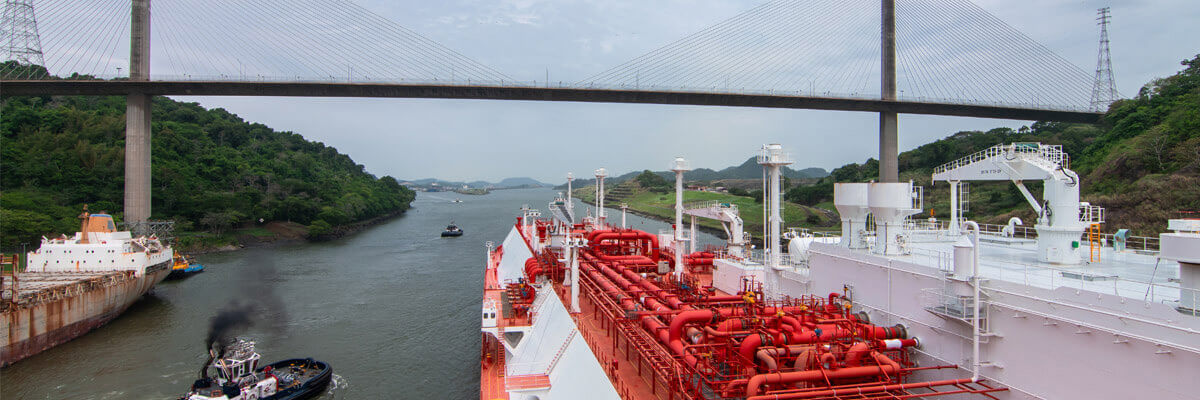
With Middle East exports constrained, American LPG has captured a record share of Asian demand, pushing freight rates to their highest level in over a decade
A structural shift in global LPG trade
The Hormuz closure has done more than disrupt LPG flows; it has accelerated a realignment that was already underway. US LPG exports hit an all-time high of 2.8 million barrels per day in April, with shipments to Asia reaching a record 1.7 million barrels per day, up 21% month-on-month. Middle East LPG exports excluding Iran have fallen to around 215,000 barrels per day, pushing vessel availability in the region to historic lows. Houston-to-Chiba freight reached the highest since the benchmark was published in 2013. The US Gulf has effectively become the world’s swing LPG supplier, a position that has significant implications for trade patterns even if Hormuz eventually reopens.
Panama Canal congestion compounds the tightness
Roughly 40% of US LPG carriers heading to Asia in April rerouted via the Cape of Good Hope after canal congestion and surging auction costs made the Panama shortcut uneconomic for many operators. The longer Cape routing increases sailing time by roughly 60%, effectively removing vessels from the market for weeks longer than normal and compressing the pool of available tonnage. This double squeeze, record export volumes on one end and longer voyages on the other, leaves little slack in the system heading into the summer loading season.
Sources: Argus Media, Clarksons Research, Vortexa