

Gulf LPG exports halt entirely, redirecting global demand to the US and creating acute vessel scarcity
April marked the tightest conditions in the VLGC market since early 2024. With Persian Gulf LPG exports effectively shut down following the Hormuz closure, Asian buyers were forced to source virtually all spot requirements from the United States, concentrating global demand on a single export region. VLGC earnings on the benchmark Houston–Chiba route jumped to approximately USD 94,000 per day by mid-month, rising more than 25 percent week-on-week at one point. The forward booking window pushed out to end-May and early June, with shipowners unwilling to accept rates below approximately USD 140,000 per day.
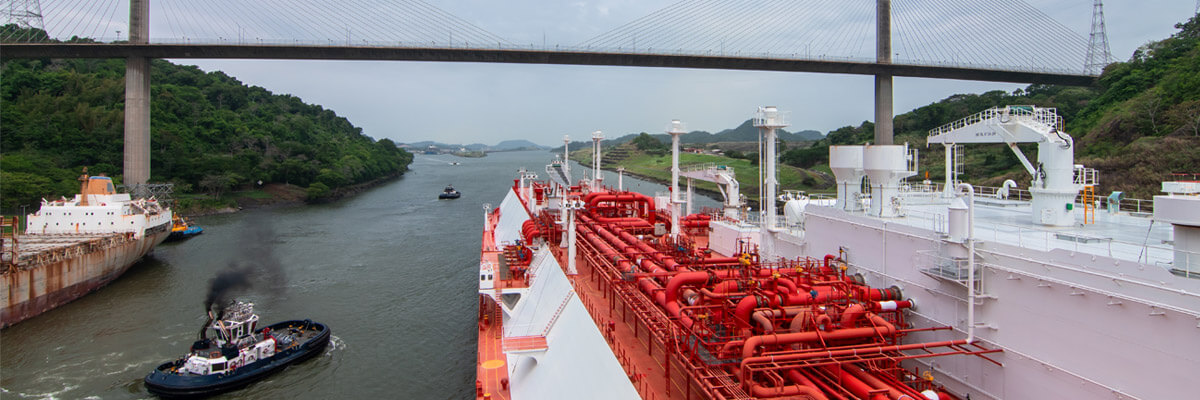
Adding to the supply squeeze, the Panama Canal became a critical bottleneck. A single guaranteed transit slot sold for USD 4 million during the month, prompting a growing share of VLGCs to reroute around the Cape of Good Hope, increasing voyage times significantly. According to Anfil Gas, 25 percent of VLGCs ballasting from the Far East to load US Gulf cargoes were now diverting via the Cape, extending effective voyage times. No ships were available to load from the US Gulf until the end of May, underscoring the depth of the supply-demand imbalance.
Dual bottleneck of Hormuz shutdown and Panama Canal congestion amplifies tonne-mile demand
The market dynamics in April were driven by the interaction of two distinct constraints. On the demand side, the loss of Persian Gulf LPG volumes meant that Asian buyers had no alternative but to accept longer-haul US Gulf supply. This alone would have tightened the market. But the Panama Canal congestion compounded the effect by extending voyage times on US-to-Asia routes, reducing the number of round trips each vessel could complete per quarter. A meaningful portion of the active VLGC fleet was further tied up in Iranian trade, floating storage, or drydock, leaving a reduced pool to service the surge in US Gulf export demand. In Asia, the ceasefire prompted some tentative interest in resuming Gulf loadings, but no fixtures materialized during the month as shipowners remained unwilling to risk Hormuz transit. The result was a market running at effective full utilization, with rates reflecting genuine physical tightness rather than speculative positioning.
Hormuz reopening would moderate rates but structural support from US export growth and fleet constraints persists
The forward outlook hinges on the Hormuz timeline. If Gulf LPG exports resume at scale, Asian buyers will regain the option to source closer to destination, reducing the premium currently attached to USG cargoes and moderating VLGC rates. However, a prolonged period of owner caution around Gulf transits, consistent with what was observed in the tanker market, could keep USG rates supported well into Q2.
US LPG export capacity continues to expand, with several terminal projects progressing and additional volumes expected from 2026 onward, acting as a positive for long-term LPG export volumes. Global seaborne LPG exports rose 6.6 percent year-on-year in the first half of 2025, with China accounting for over 22 percent of global imports. India’s state refiners are planning to lift US LPG imports to 10 percent of total intake by 2026, supporting future transpacific flows. Panama Canal drought restrictions and reduced transit slots are expected to persist at least through Q2 2026, sustaining higher voyage costs on US-Asia routes. With few new VLGCs due for delivery before 2027 and effective fleet availability constrained, the supply-demand imbalance is unlikely to ease materially even as Hormuz conditions normalize.