

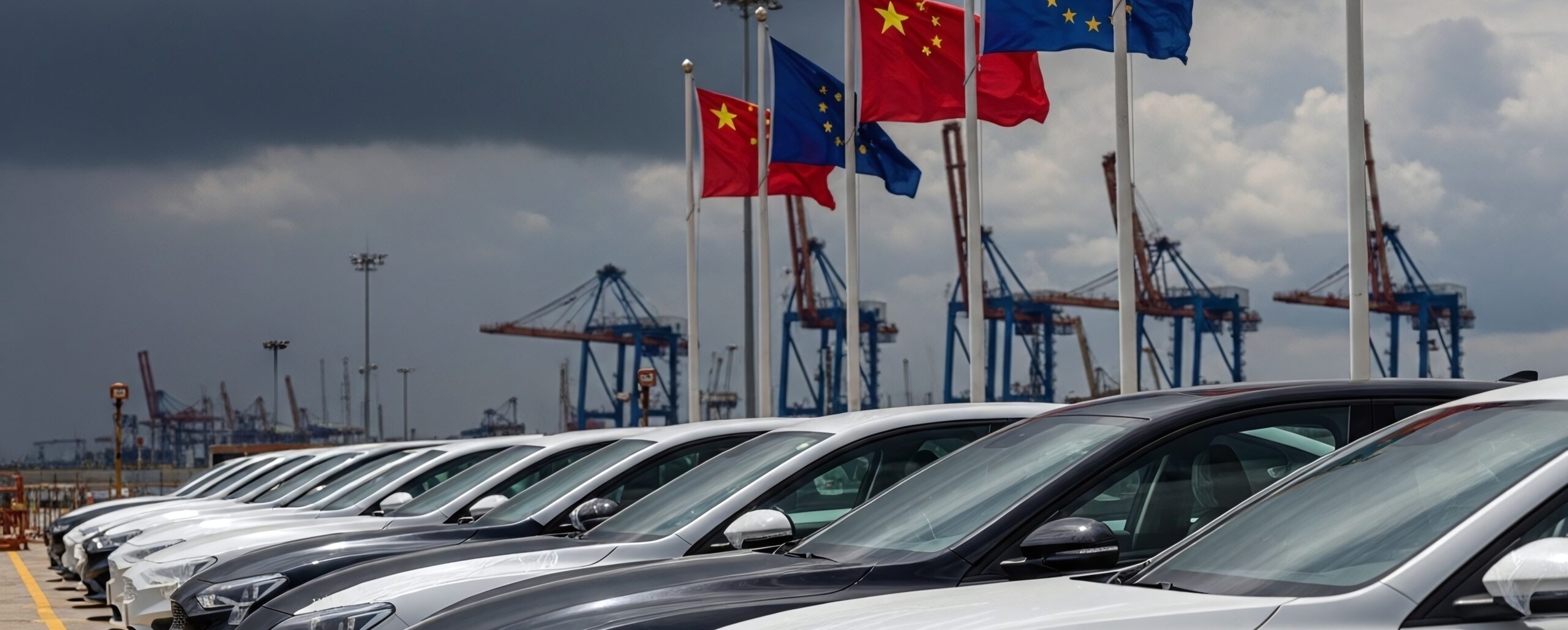
China’s vehicle exports for the year have already passed the 2025 total, keeping car carrier charter rates high. Over time, a planned EU limit on Chinese-built hybrids and new car plants in Europe could reduce some long-haul volumes.
Exports pass the 2025 total as the EU and China agree a hybrid limit
China exported around 8.2 million vehicles in the first nine months of the year, already more than in all of 2025, according to the China Association of Automobile Manufacturers. Chinese brands also took a record share of the European car market in September. In October, the EU and China announced a trade consensus that includes a limit on imports of Chinese-built hybrid and plug-in hybrid cars, reported at 350,000 vehicles per year, although the start date remains unclear. For car carriers, the direct exposure appears limited. According to Clarksons, this trade in hybrid cars from China to the EU accounts for only around 4% of global car carrier demand, and Chinese manufacturers can send more cars to other markets.
Fully employed fleet pushing rates higher
Car carriers remained fully employed in October. The six- to twelve-month charter rate for a 6,500 CEU (car equivalent unit) vessel held at around USD 95,000 per day, almost double the 2025 average of around USD 49,500 per day. For EMF’s car carriers, which are employed on long-term charters, the firm market mainly supports vessel values.
Fleet growth and European car plants test the strength of export demand
The outlook depends on whether export growth continues to absorb new ships. The car carrier orderbook equals almost a quarter of the existing fleet, but around 60% of this capacity is scheduled for delivery in 2028 or later. We therefore expect high fleet utilisation and strong earnings to continue through 2027, provided Chinese exports keep growing. Local production is the second factor. Chinese carmakers are building plants in Europe: BYD plans to begin assembly in Hungary this quarter, and Chery expects production in Barcelona to start in late 2026 or early 2027. Cars built in Europe for European buyers do not need to be shipped from China, although the effect will depend on how quickly the plants increase output. The balance would become less favourable if exports slow while deliveries increase.
Sources: Automotive World, China Association of Automobile Manufacturers, Clarksons, Dataforce, Gasgoo, Office of the US Trade Representative, Reuters & South China Morning Post