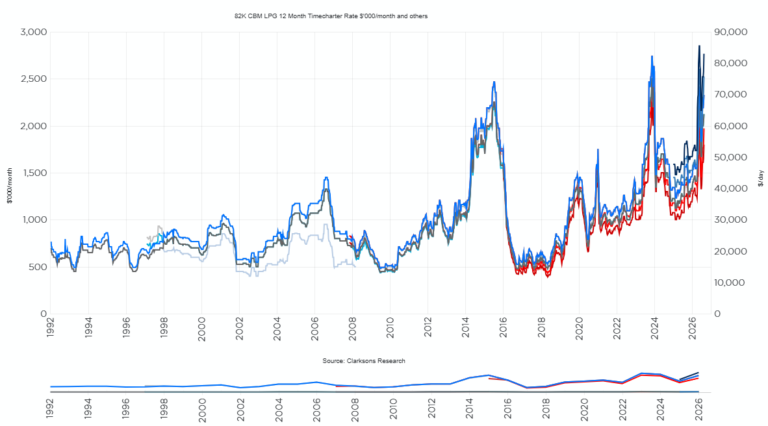

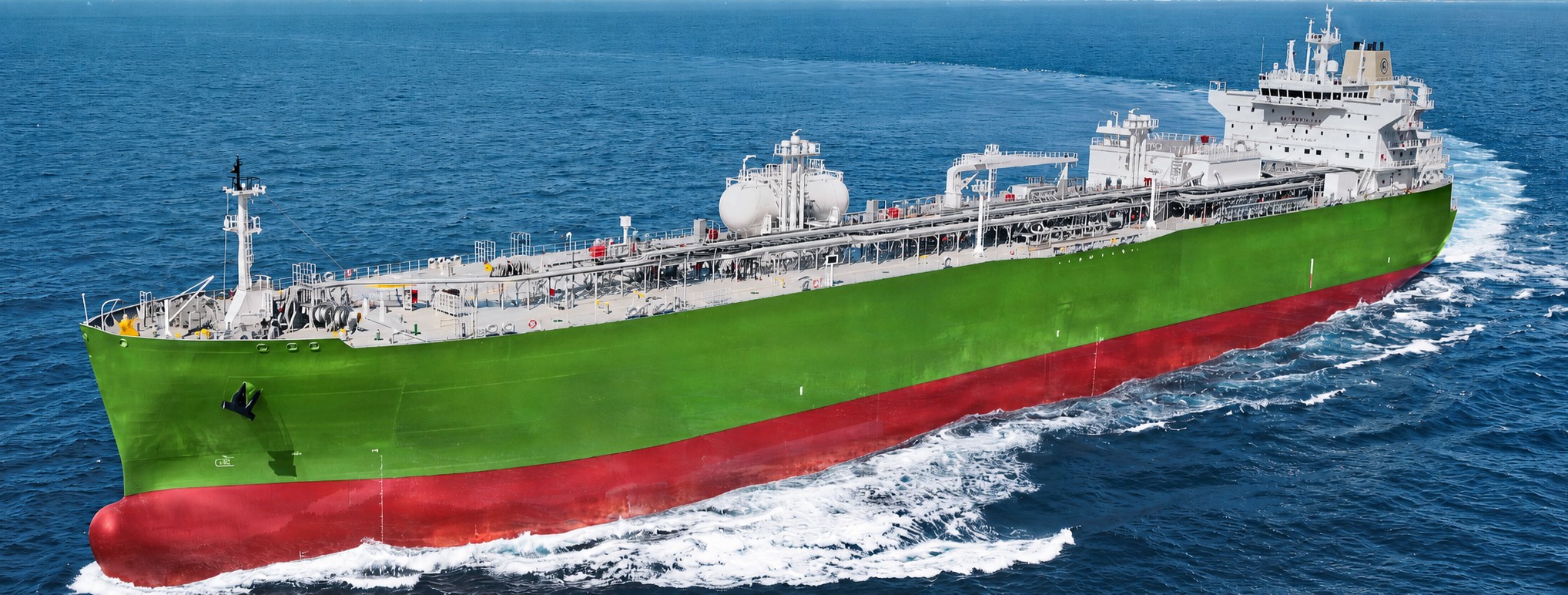
The closure of Hormuz has redirected LPG flows towards the US, while Panama restrictions are adding miles and keeping the VLGC fleet fully employed.
US exports are taking the long way to Asia
With the Strait of Hormuz unavailable, Asian buyers have increasingly turned to the US, where LPG exports are running at record levels and around 60% of volumes are now heading to Asia, according to Kpler. The shift has increased demand for long-haul VLGC capacity, while tighter conditions at the Panama Canal are adding another layer of friction. Lower water levels due to El Niño have pushed canal costs to record levels, with one gas carrier reportedly paying around USD 5.3 million for a single transit slot, according to Bloomberg. Daily bookings are set to fall from 36 vessels to 34 in early September and 32 by mid-month, encouraging more vessels to take the longer route around the Cape of Good Hope.
Longer voyages continue to support exceptional earnings
VLGC freight remained near record levels through August. Earnings on the Houston-Chiba route reached around USD 156,500 per day in the third week of the month, before easing marginally towards month-end. The shift from Panama to the Cape adds roughly 70% to voyage distance, keeping vessels employed for longer and effectively reducing available fleet capacity. With limited prompt tonnage, this continues to support both utilisation and freight rates.
Strong near-term fundamentals, larger fleet ahead
The near-term outlook remains supportive. Further Panama restrictions in September will limit available capacity, while seasonal demand typically strengthens into the northern hemisphere winter due to an increase in energy required for heating. US sanctions have also placed around 9% of VLGC capacity on restricted lists, further concentrating demand on modern, compliant vessels. The longer-term picture is more balanced, with substantial VLGC and VLAC deliveries scheduled to peak in 2027. We therefore expect market conditions to remain strong into 2027 before the growing fleet begins to ease the supply-demand balance. Modern dual-fuel and retrofit-capable vessels remain particularly well positioned, combining strong earnings potential today with flexibility as the market evolves.
Sources: Baltic Exchange, Bloomberg, BRS Shipbrokers, Clarksons Research, Kpler & TradeWinds