

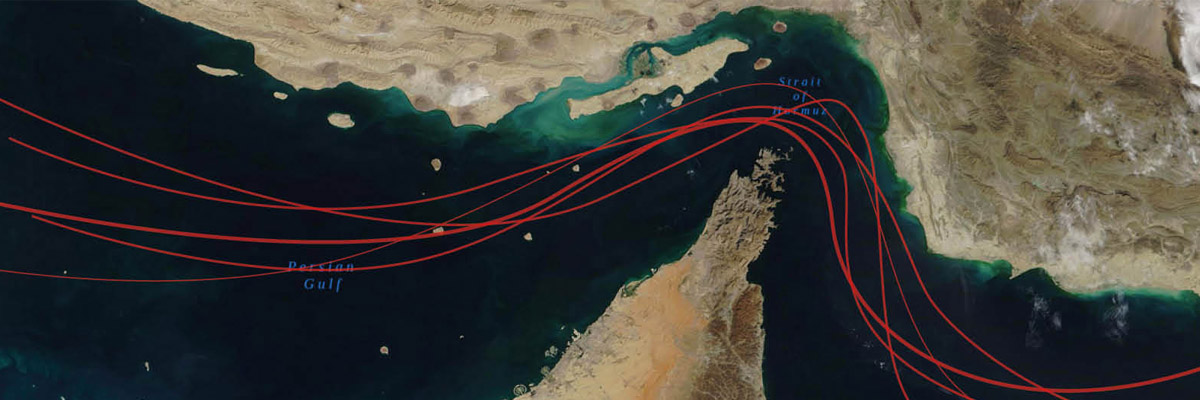
Hormuz remains disrupted as tighter sanctions and changing trade routes increase the importance of compliant tonnage.
Sanctions are tightening as diplomacy continues
Washington has launched its largest sanctions campaign against Iran since the conflict began, targeting almost 60 entities, individuals and vessels and increasing the risk of secondary sanctions for companies doing business with Tehran. At the same time, Iran and Oman have agreed on a framework for a temporary shipping corridor through Hormuz, including mine clearance and traffic management. The agreement does not yet reopen the strait: Iran has made clear that access remains conditional on wider US-Iran negotiations, and vessel traffic remains well below normal levels.
Compliance is becoming an increasingly important part of the market
Iran has also blacklisted 45 vessels it says breached its transit rules, threatening fines, detention and cargo confiscation, while warning that vessels conducting ship-to-ship transfers with blacklisted ships could face similar action. At the same time, US sanctions are further reducing the pool of vessels able to trade freely with Iran. While the immediate impact on global tanker demand may be limited, the measures are increasing the value of compliant tonnage and adding another layer of complexity to an already fragmented trading environment.
The impact may extend beyond the Strait
The conflict is also prompting Gulf states to invest in alternative export routes and infrastructure, while disrupted trade has reduced activity at major regional hubs. Jebel Ali is operating at a fraction of normal throughput, while additional capacity is being developed in Fujairah. These changes are unlikely to reverse quickly even if Hormuz reopens. For investors, the key takeaway is that the value of modern, compliant and flexible tonnage has increased. The extent to which that premium persists will depend largely on how quickly Hormuz returns to normal and how much of the new compliance framework remains in place.
Other geopolitical developments
Russia and Ukraine: attacks continue to reshape Black Sea oil flows.
Ukrainian attacks have taken a significant share of Russian refining capacity offline, prompting Moscow to restrict fuel exports and pushing Russian oil product exports to their lowest level in more than two decades. At the same time, Russian crude exports have risen as more crude is available for export. Attacks on tankers and export infrastructure in the Black Sea have also disrupted Russian and Kazakh flows. Owners willing to trade in the region continue to command a significant premium, with Suezmax earnings reaching approximately USD 469,000 per day in mid-August, according to Clarksons Research.
Canada and the US: tariffs have limited shipping impact.
Trade negotiations between the US and Canada broke down on 21 August, resulting in new tariffs covering around 5% of bilateral trade, with Canadian counter-tariffs to follow in September. The impact on shipping is expected to remain limited, as most US-Canada trade moves by land and the main seaborne flows, crude oil and oil products, are largely excluded from the tariffs.
Sources: CBS News, Clarksons Research, Lloyd’s List Intelligence, Reuters & US Department of the Treasury