

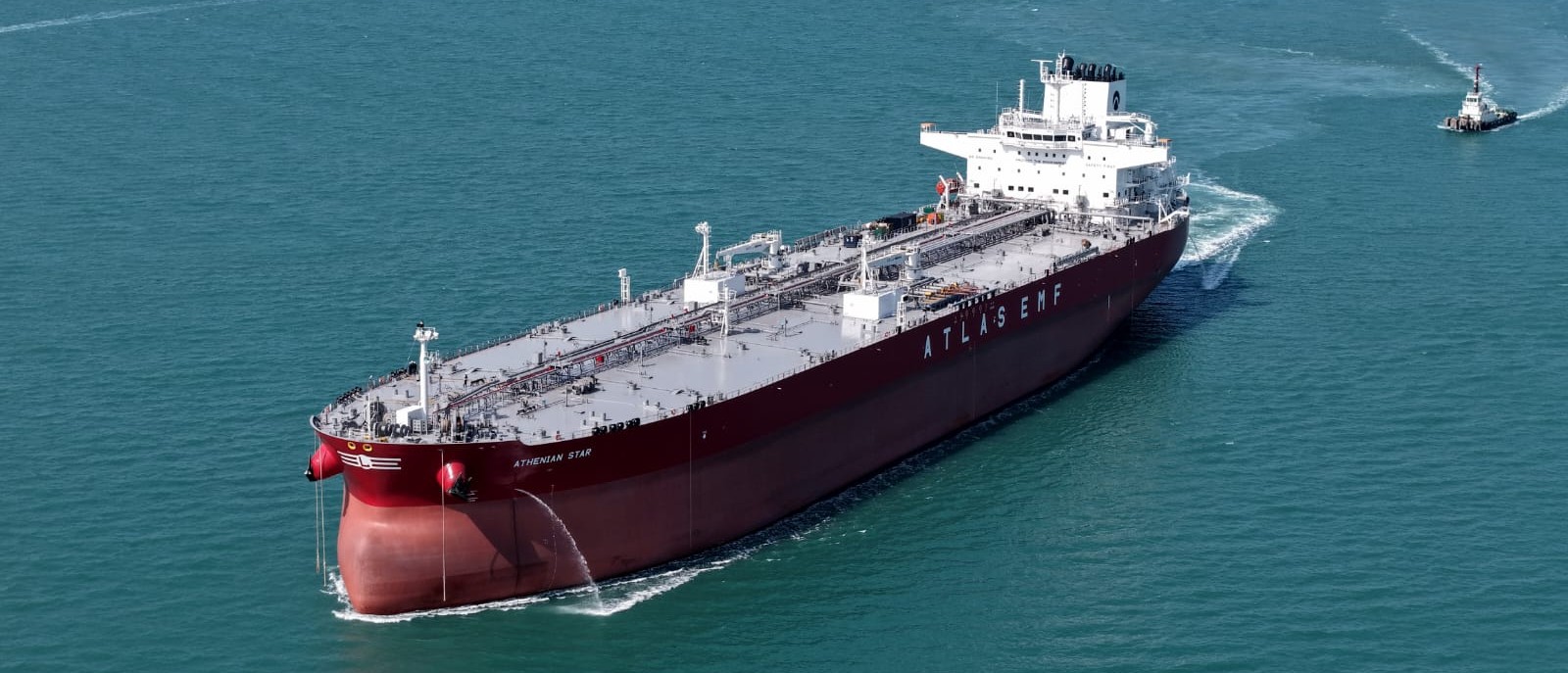
Coated LR2s are exposed from both crude and clean markets, and both are currently tight. The question for investors is how long this can last.
An LR2 is an Aframax-size tanker with coated cargo tanks, so it can carry either crude or clean products such as diesel and jet fuel. Owners are able to switch to whichever market pays more (though need thorough cleaning when going from dirty to clean). Last week, LR2 earnings were around USD 200,000 per day on routes from the Mediterranean and the Red Sea, and a record USD 313,200 per day from the Middle East to Japan (Baltic Exchange).
Strong crude markets are drawing LR2s away from clean products
BRS, citing AXSMarine data, reports that crude tonne-miles for Aframaxes and LR2s are at a record, 22% above the same period of 2025. Two trade shifts support this demand: strong European demand for US crude and the redirection of Venezuelan crude to the US, both increasingly carried on Aframaxes. According to BRS, charterers are also shifting cargoes from larger tankers to Aframaxes where the cost per tonne is lower, in some cases by splitting large cargoes. Last week, shipping crude from the Black Sea to the Mediterranean on an Aframax cost at least 15% less per tonne than on a Suezmax. As a result, 67% of the combined Aframax and LR2 fleet now trades dirty cargoes such as crude and fuel oil. The number of these ships has grown by around 6% since January, even though most new ships delivered this year were LR2s. BRS links the record clean earnings to this switch: fewer LR2s remain for clean cargoes, although Middle East clean exports are still far below pre-conflict levels.
Timecharter rates point to high earnings into 2027
One-year LR2 timecharter rates were around USD 103,000 per day last week. That is well below spot earnings, so charterers expect rates to fall, but it is still about three times the 2025 average. In the BRS base case, Aframax earnings stay above LR2 earnings until the second half of 2027, assuming Hormuz traffic returns to normal from mid-2027. Until then, LR2 owners have a reason to continue trading crude, which keeps the clean market tight.
Four factors could reduce earnings
- New ships: The orderbook for tankers of 85,000 to 125,000 dwt equals 21% of the fleet, and 2027 deliveries alone equal about 7%.
- Fleet rebalancing: More LR2s in crude trading add Aframax capacity and reduce crude earnings. As the advantage narrows, fewer LR2s leave clean trading, which increases the supply of clean tankers and reduces clean earnings.
- Lower rates for larger tankers: Cargoes move to the ship with the lowest cost per tonne, which narrows the gap. From the US Gulf to Northwest Europe, an Aframax cost 26% less per tonne than a Suezmax on 16 October, but 9% more a week later.
- De-escalation: Normal Hormuz traffic would release vessel capacity and lower peak earnings. It would also support a recovery in Gulf clean exports and LR2 demand, although damaged refineries would recover more slowly than refineries limited only by export routes.
Sources: Baltic Exchange, BRS Shipbrokers, Clarksons & TradeWinds