

Tanker market corrects from extremes
Tanker: Market softens due to Hormuz-closure
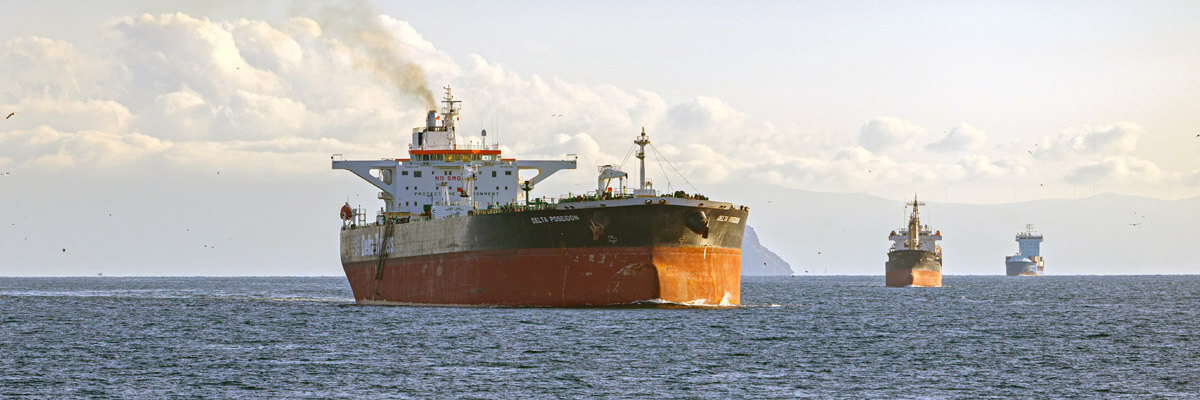
The crude tanker market has softened week-on-week as owners look to reposition tonnage and charterers exercise increased caution amid persistent Hormuz disruption. VLCC spot earnings fell to approximately USD 180,000 per day (down 38% from last week’s spike), with Suezmax at approximately USD 128,000 per day and Aframax at approximately USD 90,000 per day. Despite this correction, earnings remain significantly elevated relative to 2025 averages and reflect the combination of supply tightness and ongoing cargo rerouting through alternative corridors. The near-term trajectory for freight remains dependent on the Hormuz situation and the extent to which prolonged disruption constrains volumes alongside the current supply premium.
LPG/VLGC: USG activity sustains rates despite bunker pressure
VLGC activity in the Middle East Gulf remained strong, with robust fixing activity in the US Gulf providing crucial support to rates as charterers locked in cargoes to meet Asian demand. Houston-Chiba VLGC earnings fell slightly week-on-week to approximately USD 48,305 per day as bunker cost surges offset volume strength. The strength of USG activity reflects the widened arbitrage opportunity created by the MEG shutdown, though rate sustainability depends on how quickly alternative export channels normalize and whether rising operating costs dampen further demand.
PCTC: Rates hold firm – Limited impact from Hormuz-closure
The car carrier market remained resilient with six-to-twelve-month time charter rates for modern tonnage steady at low USD 50,000 per day. Limited near-term supply and global automotive demand continue to support the rate floor, though broader macroeconomic uncertainty surrounding the Hormuz conflict and elevated bunker costs pose downside risks to the forward curve. The PCTC segment is relatively insulated from a Hormuz closure, given that the Middle East serves mainly as an import hub rather than a key supply source.
Geopolitics: Conflict enters third week with evolving market response
Vessel transits through the Strait of Hormuz have remained severely curtailed at approximately 95% below normal levels, with further attacks on vessels and infrastructure creating persistent operational stress. Oil markets have experienced extreme volatility. Brent crude peaked at approximately USD 120 per barrel last Monday before settling to around USD 100. Supply-side disruptions have deepened, with approximately 10 million barrels per day of production now offline as storage capacity in the Gulf approaches saturation. Alternative export channels have begun to emerge, notably through Yanbu (Red Sea), where Saudi Arabia has rerouted crude with spare pipeline capacity of approximately 2.7 million barrels per day. However, total potential rerouting capacity of approximately 4 million barrels per day represents only 20% of typical Hormuz flows. Demand responses have accelerated, with China suspending refined product exports, multiple Asian nations cancelling deliveries, and bunker prices reaching record highs in Asia (VLSFO in Singapore surged 62% week-on-week to above USD 1,100 per tonne). The path forward remains highly uncertain, spanning scenarios of rapid diplomatic resolution and prompt Hormuz reopening, to prolonged disruption that constrains both cargo volumes and vessel utilization, with significant implications for inflation, energy security, and global economic growth.