

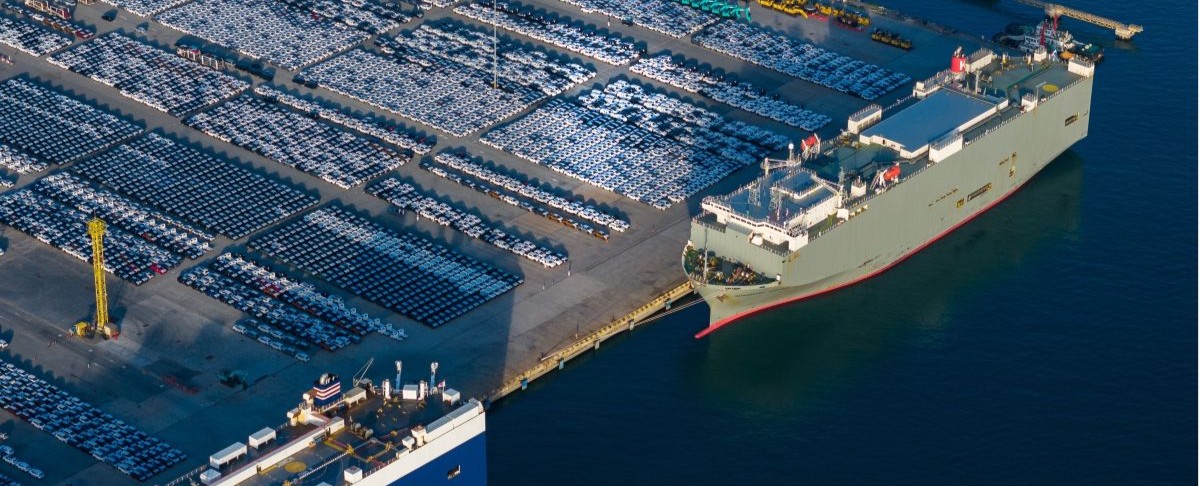
Rapid growth in Chinese vehicle exports continues to outpace fleet growth, keeping modern PCTCs in high demand, supporting strong charter rates and asset values.
Chinese exports continue to outpace fleet growth
China exported more than one million vehicles for the second consecutive month in July, reaching 1.04 million units, up 81% year-on-year. Exports for the first seven months reached 6.14 million vehicles, up 67%. The car carrier fleet has been struggling to keep pace: global car carrier capacity has grown by only around 3% this year, leaving vessels departing Asia effectively fully booked. The shortage has become so acute that around two million vehicles are expected to move in conventional shipping containers this year because dedicated car carrier capacity is unavailable.
Tight capacity is supporting earnings and asset values
The imbalance is reflected across the market. Charter rates have risen around 65% this year, with one-year timecharter rates for a 6,500 CEU (car equivalent unit) PCTC reaching approximately USD 80,000 per day, according to Clarksons Research. This is almost a doubling since August 2025, when the one-year timecharter rate was USD 45,000 per day. Second-hand values have also remained elevated as operators compete for available tonnage. August reporting from major operators confirmed that capacity out of Asia remains fully utilised, with demand exceeding available space. Owners of modern vessels with long-term employment, such as EMF, continue to benefit from high utilisation and strong rates.
Fleet growth is coming, but not soon enough
Owners are responding to the shortage. PCTC newbuilding orders have rebounded strongly this year after a near standstill in 2025, with additional orders announced in August. Most of this capacity, however, is scheduled for delivery between 2029 and 2031, while a meaningful share will replace ageing vessels rather than expand the fleet. The current imbalance between rapidly growing vehicle exports and limited fleet growth is therefore likely to persist for several years. For owners of modern, fuel-efficient PCTCs, strong Chinese exports, full utilisation and limited near-term deliveries continue to provide a favourable market backdrop.
Sources: Clarksons Research, Höegh Autoliners, Ship Universe, Wallenius Wilhelmsen & Xinhua