

Sources: Clarksons & Hoegh Autoliners
Escalating Middle East conflict halts vessel traffic through one of the world’s key automotive trade corridors
Security escalation forces effective shutdown of Hormuz transit
Escalating conflict in the Middle East has sharply increased risk across global shipping markets, with the Strait of Hormuz effectively closed following the US-Israel strikes on Iran under Operation Epic Fury on 28 February. Iran’s subsequent missile and drone attacks across the Gulf region triggered a rapid deterioration in maritime security conditions, prompting the Islamic Revolutionary Guard Corps to declare the Strait closed on 2 March. Vessel arrivals have since fallen by more than 90%, with multiple commercial ships struck across the Arabian Gulf and Gulf of Oman. At the same time, disruption to key regional ports and energy infrastructure, combined with the withdrawal of war-risk cover by several major P&I clubs, has made commercial transit through the corridor largely unviable despite discussions of potential US naval escort programs.
Finished vehicle flows face disruption as carriers suspend Gulf bookings
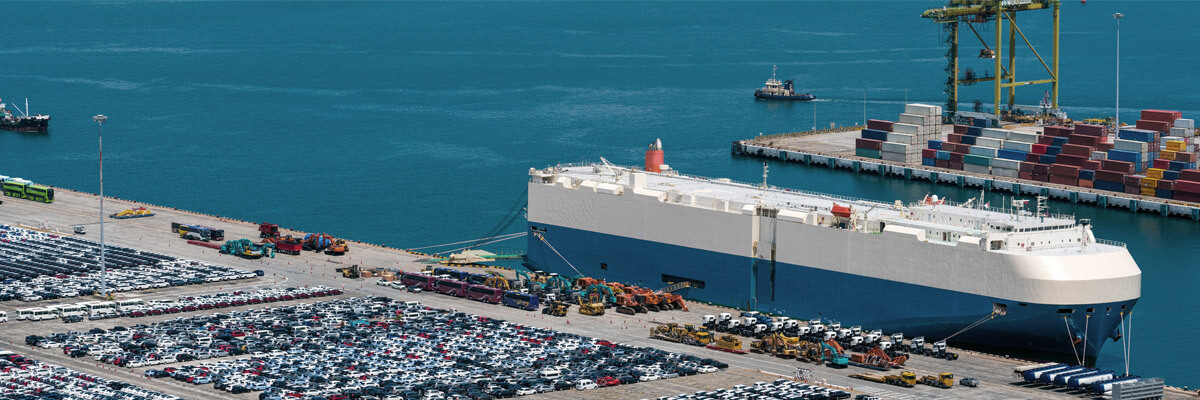
For the PCTC segment, the Strait represents a meaningful artery for global finished vehicle trade, accounting for roughly 9% of seaborne car shipments. Current vessel tracking indicates around 16 PCTCs remain inside the Arabian Gulf, while major carriers have suspended new bookings into the region as the security situation evolves. Approximately 3.3 million CEU of annual vehicle trade normally transits the Strait, led by exports from China and Japan, followed by the US, South Korea and the EU. In the near term, the market impact is expected to centre on schedule disruption and booking delays, though a prolonged closure could see vessels redeployed to other trade lanes while regional vehicle supply chains in Saudi Arabia and the UAE remain constrained until access through Hormuz is restored.
Overall, there is a positive momentum in the PCTC sector currently, as emphasized by Andreas Enger, CEO of Hoegh Autoliners this week: “February was a solid month, with rates reported slightly higher following an improved cargo mix. We continue to follow the situation in the Middle East closely and maintain dialogue with relevant stakeholders to safeguard our employees, vessels and cargo.”