
Engine deliveries, bunkering infrastructure, and vessel orders confirm ammonia is moving from pilot to execution
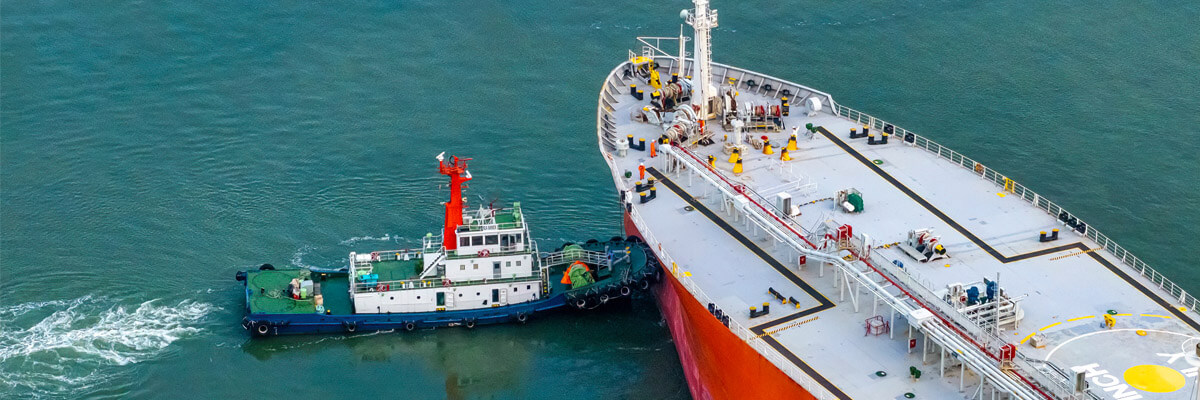
The ammonia-as-marine-fuel transition advanced meaningfully in April, with several developments confirming that the technology is crossing from pilot stage into early commercial deployment. First ammonia dual-fuel engine deliveries are now underway, with established shipowners and engine makers, including Wärtsilä, Höegh Autoliners, and Exmar, committing to ammonia-capable vessels and propulsion systems across 2026 and 2027. On the infrastructure side, bunkering hubs are under development in Singapore, Egypt, the Netherlands, Norway, and Japan. CF Industries, Trafigura, and TFG Marine signed an agreement to develop low-carbon ammonia as a marine fuel targeting the US Gulf Coast and northwest Europe. According to Clarksons Research, 316 ammonia-ready vessels are currently on order globally. A study commissioned by WinGD and Envision Energy found that green ammonia could be cost-competitive with VLSFO and LNG at current prices with moderate regulatory support, a finding that shifts the investment case from a purely environmental mandate toward commercial viability.
Hormuz disruption tests ammonia commodity markets but reinforces strategic case for supply diversification
The closure of the Strait of Hormuz introduced short-term turbulence into ammonia commodity markets, with benchmark prices in northwest Europe rising by approximately USD 105 to USD 150 per tonne over March and April. The Middle East accounts for more than a fifth of global ammonia supply, so the disruption was not trivial. However, the market demonstrated resilience, with buyers successfully redirecting procurement toward North Africa, Southeast Asia, and the US Gulf Coast. This rerouting highlights an increasingly mature global ammonia trade network and suggests that the commodity supply base is more diversified than the concentration of production might imply. For investors, the Hormuz disruption appears cyclical rather than structural, with limited lasting impact on ammonia’s trajectory as a marine fuel.
Regulatory setbacks slow the policy framework, but commercial momentum is self-sustaining
The IMO’s postponement of its Net-Zero Framework, following opposition from the United States and other member states, has introduced uncertainty around the timeline for global carbon pricing and emissions standards. Without a clear regulatory price signal, adoption of alternative fuels depends more heavily on commercial economics and voluntary charterer preferences. However, the progress observed across engines, vessels, bunkering infrastructure, and supply agreements suggests that ammonia’s commercial momentum is no longer dependent on a single regulatory catalyst. Twelve bunkering demonstrations across nine global locations have been successfully completed, and full-scale engine trials confirmed tank-to-wake emission reductions of 90 to 95 percent. The Panama Canal Authority’s introduction of a weekly priority transit slot for dual-fuel vessels capable of running on ammonia or methanol further illustrates how infrastructure operators are already incentivising ammonia-ready tonnage.