

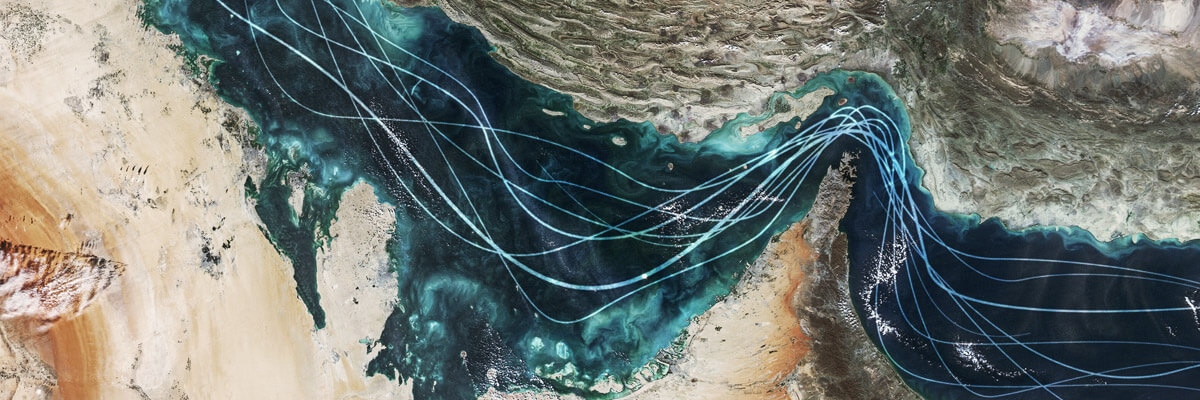
Traffic rebounded sharply after the June 18 MOU, but Iran’s re-declared closure on June 20
A partial reopening, not a return to normal
When the US-Iran memorandum of understanding was signed on June 17, shipping activity recovered quickly: Kpler recorded 93 transits over the June 19-21 weekend, up from 32 the prior weekend, with US CENTCOM reporting 55 ships on June 20 carrying more than 17 million barrels, a single-day record. However, Iran’s military declared the strait closed again on June 20, citing Israeli strikes in Lebanon as a ceasefire violation, before Iran’s own foreign ministry contradicted the announcement within hours. By June 22, transits had dropped to 12 vessels according to Windward, with most inbound ships disabling their location transponders to avoid detection.
Insurance, mines, and diplomacy are the three remaining barriers
War-risk insurance premiums remain significantly above pre-crisis levels, making the economics of a Hormuz transit difficult for most commercial operators regardless of the diplomatic signals. Active mine-clearance warnings issued by the Joint Maritime Information Center remain in effect near the strait’s main shipping lane, and the IMO announced on June 23 a coordinated plan to evacuate more than 11,000 seafarers still stranded in the Persian Gulf since February, underlining the scale of the backlog that has yet to clear. US-Iran talks continued in Switzerland, focused on stabilising the MOU and resolving the Lebanon ceasefire clause that triggered Iran’s June 20 closure declaration. A genuine normalisation of Hormuz shipping volumes requires sustained incident-free passage, a meaningful reduction in insurance premiums, and the completion of mine clearance, making a return to pre-crisis transit levels a process of months rather than days.
Sources: Al Jazeera, CNBC, IMO, Joint Maritime Information Center, Kpler, Marine Log, Windward