

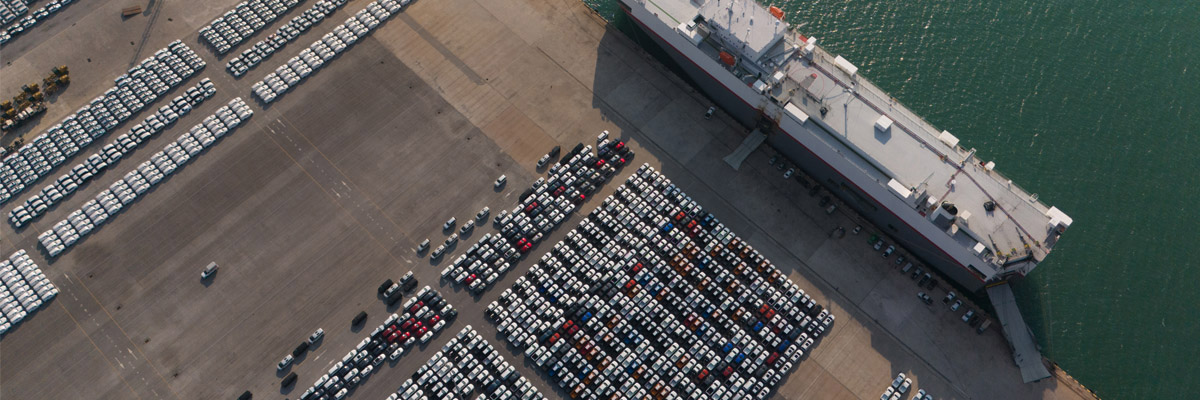
China’s overcapacity is driving a structural shift in global vehicle trade flows, with implications for both cargo volumes and the regulatory environment
Chinese exports cross one million units in a month for the first time
China exported more than one million vehicles in June, up 71% year-on-year, putting the country on track to export more than 10 million vehicles in 2026. The milestone reflects persistent domestic overcapacity and weakening demand at home, which is accelerating the push into overseas markets. BYD, Chery, and Geely all reported record international sales, while Tesla more than doubled exports from its Shanghai factory in the first half of the year. This surge in outbound volumes continues to underpin PCTC demand, absorbing new tonnage and keeping one-year timecharter rates steady at USD 70,000 per day through July, an increase from H1 2026.
Trade policy tightening signals a shifting landscape
The political response to China’s export expansion is intensifying. The United States reimposed tariffs on 60 trading partners in late July and is advancing legislation that would permanently ban automakers with more than 15 percent Chinese ownership from selling associated vehicles in the US. In Europe, Volkswagen confirmed plans for up to 100,000 job cuts to address a 20% cost disadvantage against Chinese competitors. These developments suggest that the trade patterns currently driving PCTC demand are not static: regulatory barriers, shifting production footprints, and the expansion of Chinese assembly outside China could gradually alter the volume and direction of seaborne vehicle flows.
Logistics disruption and fleet growth add complexity
Red Sea disruption is now reaching the PCTC segment more directly, with Houthi attacks pushing more car carriers around the Cape of Good Hope and increasing voyage distances. The Panama Canal Authority has also announced additional draught restrictions from late July in preparation for El Nino, a Pacific weather cycle that brings drier conditions to Central America and which caused severe canal disruptions in 2023. On the supply side, approximately 67 vessels are expected in 2026 and around 50 in 2027, the large majority from Chinese shipyards. For now, demand growth is keeping pace with fleet capacity and car-mile demand both expanding at approximately 3.3 percent in the first half of the year. The charter index for 6,500 CEU vessels has risen roughly 50 percent since January, and the segment’s relative insulation from Hormuz-related disruption continues to provide stability within a diversified shipping portfolio.
Sources: China Association of Automobile Manufacturers, Clarksons Research, Financial Times, Reuters, Ship Universe, TradeWinds & Xinde Maritime News