

Despite the deal signing, energy markets remain skeptical of how fast normal flows can resume
Deal would end blockades on both Hormuz and Iranian shipping
The US and Iran signed a nuclear agreement on June 18, ending two maritime blockades simultaneously: Tehran’s Strait of Hormuz closure and Washington’s sanctions-backed restriction on Iranian shipping and oil exports. The agreement grants Iran immediate sanctions waivers for oil sales resumption, with broader financial commitments and nuclear-program negotiations deferred to a 60-day window. Speaking at the G7 summit, President Trump confirmed the signing was complete, though he signalled that US strikes would resume if Iran violates the deal’s terms.
Energy markets stay cautious on the pace of a Hormuz reopening
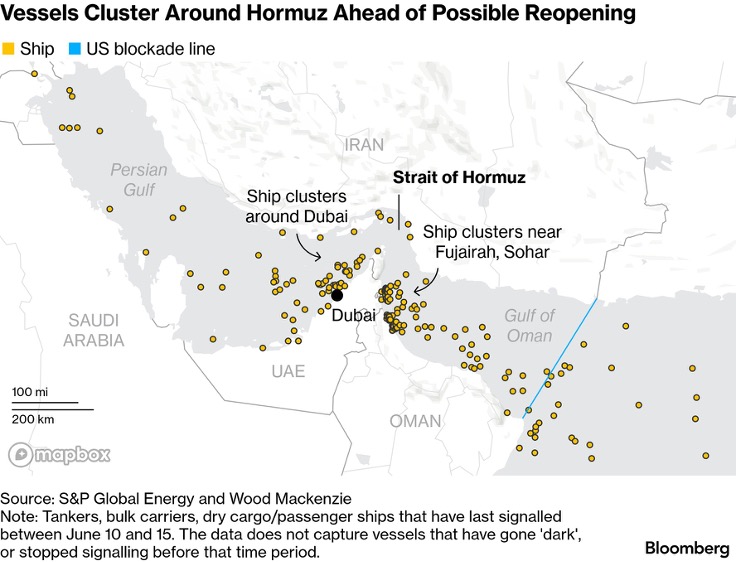
For tanker owners, the deal introduces a meaningful but uncertain catalyst. Bloomberg reports that energy insiders remain skeptical the Strait can reopen as quickly as hoped following the signing, and European nations including France, the UK and Italy have signalled willingness to help clear mines from Hormuz if needed, though they remain wary of the risk to their own vessels.. The mutual distrust between Washington and Tehran adds further uncertainty, with the White House indicating that Trump would resume strikes if Iran is seen to violate the deal’s terms. Even so, a genuine reopening would ease the energy price pressure that has been feeding into broader inflation and stagflation concerns, and a phased return of normal flows through Hormuz should support sentiment across tankers and VLGCs well before volumes fully normalise.
Source: Bloomberg